The IEEE IISc Student Branch and the Kotak IISc AI-ML Centre (KIAC) are jointly organising a special talk titled ‘Glimpses of AI’ by Prof Arogyaswami J Paulraj, Professor Emeritus, Stanford University. All are welcome!
The event details are as follows. Everyone interested to join is requested to kindly fill out the google form.
Title: Glimpses of AI
Speaker: Prof Arogyaswami J Paulraj, Professor Emeritus, Stanford University
Date: Monday, 14 December 2026
Time: 4:00 PM IST
Venue: Golden Jubilee Hall, Department of Electrical Communication Engineering, Indian Institute of Science, Bengaluru
About the talk
Today’s diffusion-based generative models, such as stable diffusion and DALL·E, create images by learning to reverse a noising process, running diffusion backward in time. In this talk, Prof Paulraj will trace how this mechanism was anticipated decades ago in classical work on estimating signals from noisy observations. He will then turn to a deeper representational question: what can deep neural networks (DNNs) express, and what can nonlinear differential equations (ODEs and PDEs) express?
DNNs learn rich functions directly from data, but they have no built-in reason to respect physical laws or behave correctly outside their training data. Differential equations encode conservation laws, symmetries and long-time behaviour by construction, but they need the underlying mechanism to be known. The talk will argue that the two are complementary rather than competing. DNNs are best suited to learning representations and unknown dynamics from data, and differential equations to governing how a system evolves over time. Along the way, Prof Paulraj will touch on approaches that combine both neural ODEs, physics-informed neural networks (PINNs) and physics-informed generative models. Students working on generative models, representation learning, signal processing, or scientific machine learning should find it especially relevant.
About the speaker
Prof Arogyaswami J Paulraj is Professor Emeritus at Stanford University (https://apaulrajpeople.sites.stanford.edu/) and is widely recognised as a pioneer of MIMO (multiple-input multiple-output) wireless communication. This technology is now at the heart of Wi-Fi, 4G and 5G networks worldwide.
Before joining Stanford, he served in the Indian Navy for about 25 years, where he led the development of the APSOH system. He later founded the wireless companies Iospan Wireless and Beceem Communications, which helped bring MIMO technology to market. His work has been recognised with the Marconi Prize (2014), the IEEE Alexander Graham Bell Medal (2011), and the Padma Bhushan (2010). He is also a member of the US National Academy of Engineering.
His research roots go back to his 1973 PhD thesis, ‘Estimation of Markov Processes Corrupted by Additive White Gaussian Noise’, written while he was a Navy Lieutenant attached to IIT Delhi. The thesis proved a single unifying theorem covering filtering, prediction, smoothing, and retrodiction (estimating a signal before the observation window begins), a problem he introduced himself. It reduced all four to one master equation and derived nine estimation algorithms, six of them new. At its core was a technique of running a diffusion process backward in time. Nearly five decades later, the same mechanism became the engine of today’s diffusion-based generative AI models.

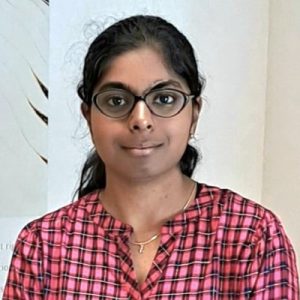 I joined the BTech programme in Mathematics and Computing at the Indian Institute of Science in 2022. My faculty advisor, Professor Viraj Kumar, has guided my academic journey, and I had the opportunity to work under his mentorship during the summer of 2024.
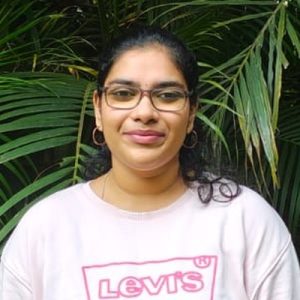 I joined BTech at IISc in 2024.
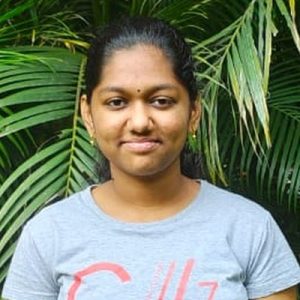
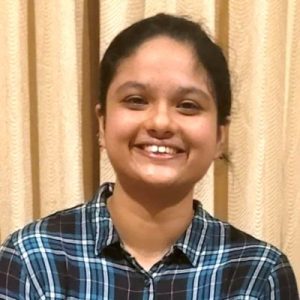
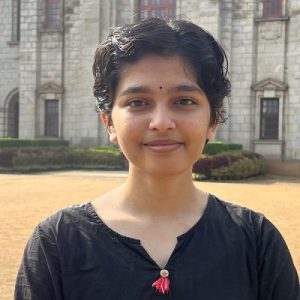
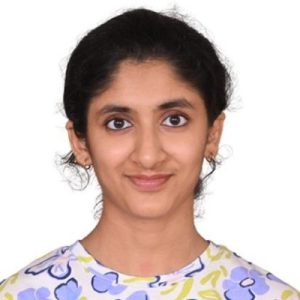
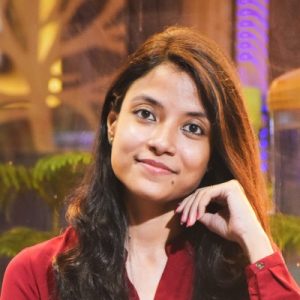
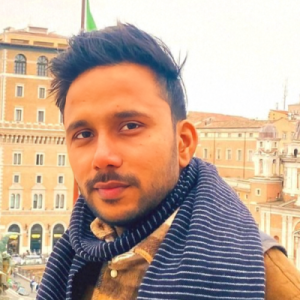
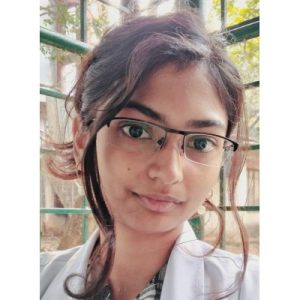 I joined the BTech programme in 2024. My faculty advisor is Professor Viraj Kumar. I am interested in computer science and would like to do research in computer science in the future.
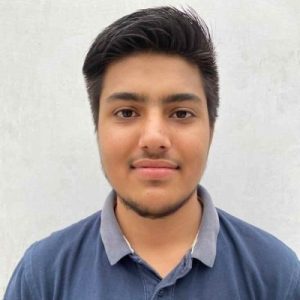 Anmol Gill pursues the MTech (Artificial Intelligence) programme at IISc, in the Robert Bosch Centre for Cyber-Physical Systems (
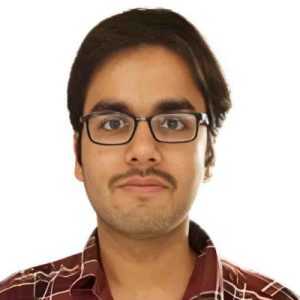
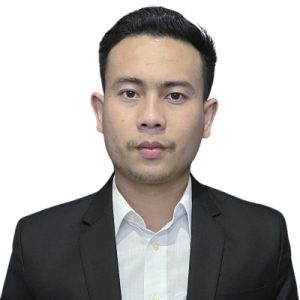
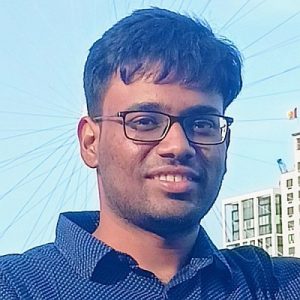
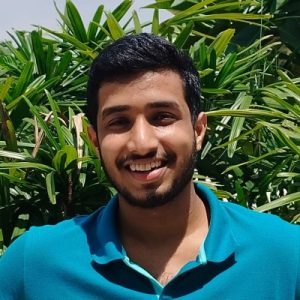
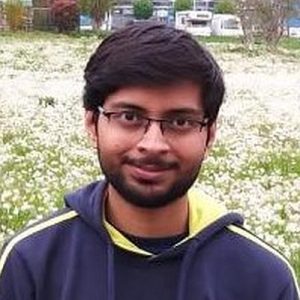
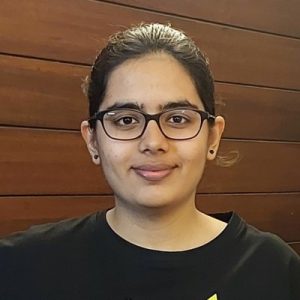
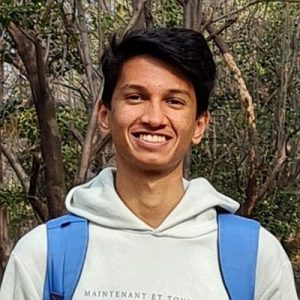
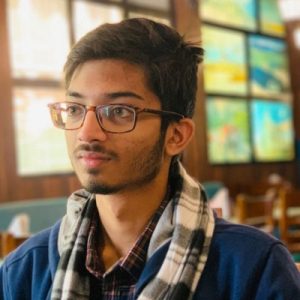
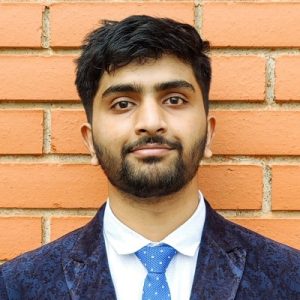
 I recently completed my BTech in August 2024 from the Vellore Institute of Technology, Chennai, with a major in Electronics and Communication Engineering. From May 2024, I am a research intern, supported by the Kotak-IISc AI/ML Centre, in the Human-Interactive Robotics (HiRo) Lab at the Robert Bosch Centre for Cyber-Physical Systems, IISc. I am working under the guidance of Professor Ravi Prakash. My essential area of interest lies in robot learning, which lies under the general area of AI and robotics.